


Planning a full year of cosmetic product launches is one of the most complex—and at the same time most decisive—tasks for a beauty brand. It is not just about deciding how many products to launch or in which months, but about coordinating innovation, technical development, production, and market strategy in a coherent and realistic way.
In practice, many brands arrive at the laboratory with an annual launch calendar already closed that, on paper, seems to work. However, as the year progresses, delays, reformulations, shifts in priorities, and launches that are postponed or canceled begin to appear. In most cases, the problem is not a lack of ideas, but a planning process that has not taken into account the real timelines and processes of cosmetic development.
From the laboratory’s perspective, annual planning is not understood as a simple calendar, but as a strategic tool that connects brand vision, technical feasibility, and market reality.
Why Many Cosmetic Planning Strategies Become Misaligned
One of the most common mistakes in the cosmetic industry is assuming that annual planning is purely a commercial or marketing task. Launch dates, campaigns, and sales targets are defined without integrating, from the outset, the technical and production realities.
This leads to recurring misalignments:
- Overly optimistic timelines that fail to consider key phases such as stability testing, validations, or formula adjustments.
- Clusters of launches at certain times of the year that overwhelm both internal teams and the laboratory.
- Projects moving forward in parallel without clear prioritization, competing for the same resources.
- Concept changes mid-development that force previously completed work to be redone.
The direct consequence is a constant feeling of “putting out fires”: teams work under pressure, reactive decisions are made, and coherence between products reaching the market is lost.
When planning is not supported by a technical vision from the start, the calendar stops being a roadmap and becomes a source of stress.
Key Decisions That Shape the Entire Year
An effective annual planning strategy does not begin with dates, but with strategic decisions that condition all subsequent development. Many of these decisions are made implicitly or incompletely, and their impact is not felt until months later.
Some of the most decisive decisions include:
The Realistic Number of Launches
Not all brands can sustain the same pace of innovation. Launching more products does not always mean growing better. Each launch involves development, testing, production, communication, and commercial support.
The Level of Innovation of Each Product
Planning a line extension is not the same as developing a completely new product. The level of innovation directly affects development timelines and the laboratory’s workload.
Market and Sales Channels
A product intended for domestic e-commerce does not face the same requirements as one designed for international distribution or professional channels. Regulations, documentation, and scalability change entirely.
Coherence Between Launches
When products are planned in isolation, brand coherence is easily lost. Annual planning allows brands to build a global narrative, rather than a collection of disconnected launches.
These decisions go beyond marketing; they determine how the cosmetic laboratory can organize technical development efficiently. The clearer they are from the beginning, the smoother the process throughout the year.
Innovation, Development, and Real Timelines
One of the most critical points in annual cosmetic launch planning is the clash between the idea of innovation and the real timelines of cosmetic development. Innovation does not happen instantly, nor can it be forced without consequences.
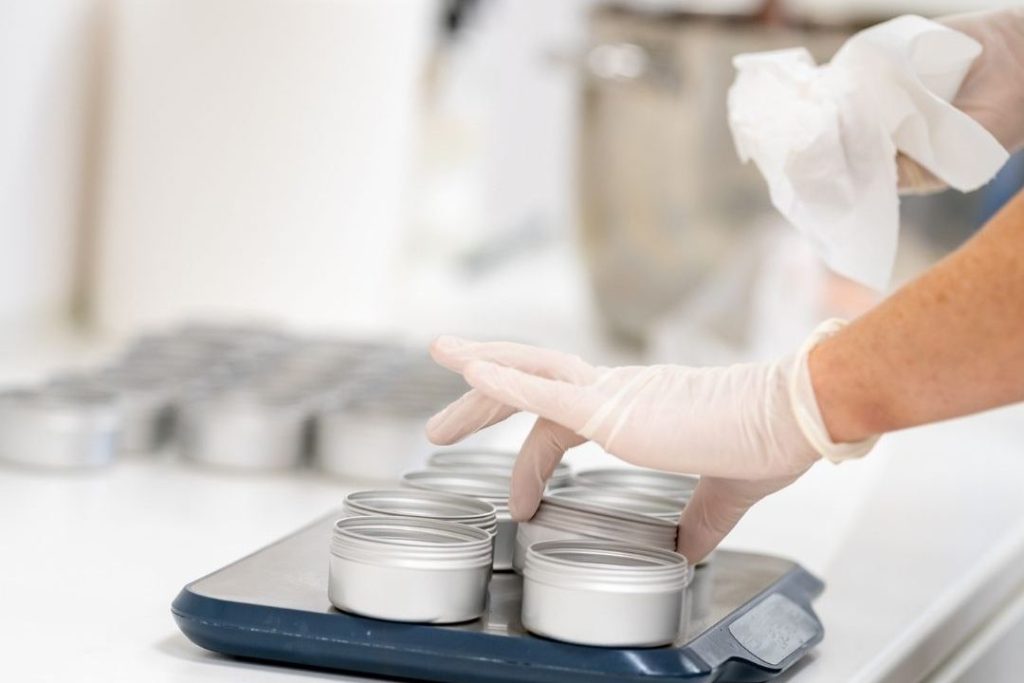
From the laboratory’s standpoint, developing a cosmetic product involves technical phases that cannot be compressed without compromising quality, safety, or feasibility:
- Technical definition of the project based on the brand concept.
- Development of prototypes and initial samples.
- Formula adjustments according to stability, sensoriality, and efficacy.
- Required tests prior to production (stability, compatibility, validations).
- Preparation for scaling and manufacturing.
When these timelines are not integrated into annual planning, unrealistic expectations arise. Products are expected to be ready “by a certain month” without considering whether development started early enough or whether that launch overlaps with other ongoing projects.
Additionally, not all products require the same development path. Part of the value of good planning lies in knowing how to combine more complex projects with more agile ones, balancing innovation with operational capacity.
From laboratory experience, aligning innovation with real timelines does not mean limiting creativity, but channeling it strategically. A well-structured plan allows brands to innovate with intention, without compromising quality or forcing processes that, in the medium term, inevitably take their toll.
What Happens When the Laboratory Gets Involved Too Late
When the laboratory is brought in late to annual planning, the effects are not always immediately visible. At first, the calendar appears to move forward and commercial decisions seem to be settled. However, once technical development begins, frictions arise that could have been avoided with earlier integration.
One of the first issues is the misalignment between expectations and technical reality. The laboratory receives projects with fixed deadlines, poorly defined concepts, or levels of innovation that do not match the available timelines. This forces teams to work under pressure and reduces the ability to propose optimal solutions.
Last-minute adjustments are also common: changes in actives, reformulations due to stability issues, or texture and sensorial modifications that no longer align with the original concept. Each adjustment requires time, additional testing, and often leads to cost increases that were not accounted for in the original plan.
Another frequent effect is the loss of coherence between products. When launches are planned in isolation and the laboratory’s role is limited to execution, the overall vision is lost. Products may work individually, but they do not always build a solid brand narrative or a balanced range.
Late laboratory involvement also leads to more reactive than strategic decisions. Instead of anticipating potential obstacles, teams respond when problems are already on the table. This generates stress, slows down other ongoing projects, and makes it difficult to maintain a stable plan throughout the year.
From laboratory experience, most delays and blockages are not due to technical complexity itself, but to having started the process without a shared foundation between brand and development.
The Laboratory as a Strategic Partner

Viewing the laboratory as a strategic partner, rather than merely a supplier, makes a clear difference in annual cosmetic launch planning. When the laboratory is involved from the earliest stages, the entire approach changes.
A laboratory engaged from the start can help translate brand vision into viable projects, adjusting expectations without limiting ambition. This includes advising on realistic timelines, launch prioritization, and innovation levels that are feasible given available resources.
The laboratory also brings a global technical perspective that helps anticipate bottlenecks. Not all launches require the same effort or development path, and planning them with discernment prevents unnecessary overlaps and workload peaks at certain times of the year.
Another key aspect is resource optimization. Joint planning allows brands to reuse learnings, technologies, or formulation bases where appropriate, without compromising product differentiation. This results in more efficient processes and better-structured developments.
The laboratory also acts as a coherence filter. Throughout the year, new ideas or changes in direction inevitably arise. Having a technical partner makes it easier to assess whether those adjustments fit within the overall plan or whether priorities should be reorganized to avoid destabilizing the whole strategy.
When the relationship between brand and laboratory is built on collaboration and long-term vision, annual planning stops being a rigid document and becomes a flexible yet controlled tool, capable of adapting without losing direction.
How to Achieve Coherent and Sustainable Launches
The coherence and sustainability of cosmetic launches do not depend solely on the number of products or the budget invested. They depend primarily on how annual planning has been constructed and on the relationship between innovation, development, and market.
A fundamental first step is to view the year as a whole, not as a sequence of independent launches. Each product should serve a clear purpose within the brand’s global strategy: expanding a range, reinforcing positioning, opening a new segment, or consolidating an existing market.
It is also essential to balance innovation and feasibility. Innovation is necessary to differentiate, but not every launch must be disruptive. Combining more ambitious projects with more continuous ones allows brands to maintain a steady rhythm without overloading technical development.
Anticipation is another decisive factor. Starting developments with sufficient lead time allows deeper work on formula, sensoriality, and efficacy, avoiding rushed solutions that ultimately affect product perception.
From the laboratory’s perspective, achieving sustainable launches also means thinking about scalability and repeatability. A product does not end at launch; it must be produced consistently, maintain quality over time, and adapt to the brand’s evolution.
Finally, coherence is built through clear and well-communicated decisions. When all stakeholders—brand, laboratory, commercial teams—share the same vision, launches stop being isolated efforts and become part of a solid and recognizable strategy.
Conclusion: Planning with Intention to Grow with Purpose
Annual planning of cosmetic launches is far more than a calendar exercise. It is a strategic decision that defines how a brand innovates, positions itself, and grows over time.
Integrating the laboratory from the outset, respecting the real timelines of cosmetic development, and aligning innovation, production, and market strategy not only prevents errors and delays, but enables brands to build coherent, sustainable launches aligned with their identity.
At MS Lab, we understand planning as a shared process, where technical expertise supports strategy and every decision has a real impact on the final outcome. Because launching successfully is not about moving faster—it’s about planning better.

