

The skin is far more than a simple protective barrier. As the largest organ in the human body, it constantly interacts with internal and external factors that influence its appearance, function, and overall health. Among these factors, hormones play a particularly important role.
Throughout life, hormonal fluctuations affect multiple aspects of skin physiology, including hydration levels, sebum production, barrier function, collagen synthesis, and inflammatory processes. These changes help explain why the skin may appear radiant and balanced at certain times, while becoming more sensitive, oily, or prone to blemishes at others.
In recent years, growing interest in the relationship between hormones and skin health has driven the emergence of a new category within the cosmetics industry: hormonal skincare.
This approach is based on a fundamental idea: the skin is not a static organ. Its needs can vary significantly according to hormonal changes associated with the menstrual cycle, pregnancy, postpartum recovery, perimenopause, menopause, and even prolonged periods of stress.
As consumers increasingly seek personalized beauty solutions, understanding how hormonal fluctuations influence skin behavior and the response to specific cosmetic ingredients is becoming an area of growing interest for both brands and formulation laboratories.
What Is Hormonal Skincare?
Understanding the Connection Between Hormones and Skin
The term hormonal skincare refers to cosmetic strategies and products that take into account the influence of hormones on skin physiology.
Unlike traditional approaches, which typically focus solely on skin type, hormonal skincare recognizes that skin needs can change dynamically over time due to hormonal fluctuations.
These changes may influence factors such as:
- Sebum production.
- Hydration levels.
- Skin sensitivity.
- Inflammatory response.
- Elasticity and firmness.
- Skin barrier integrity.
As a result, many people notice that the same product may deliver different results depending on where they are in their hormonal cycle.
This does not necessarily mean that the product has become less effective. Rather, the physiological state of the skin has changed, causing it to respond differently to the active ingredients within the formulation.
Why Hormones Affect Skin Behavior
The skin contains receptors that respond to various hormones circulating throughout the body.
Among the most important hormones affecting skin health are:
- Estrogens.
- Progesterone.
- Androgens.
- Cortisol.
These hormones participate in numerous biological processes that directly influence the appearance and function of the skin.
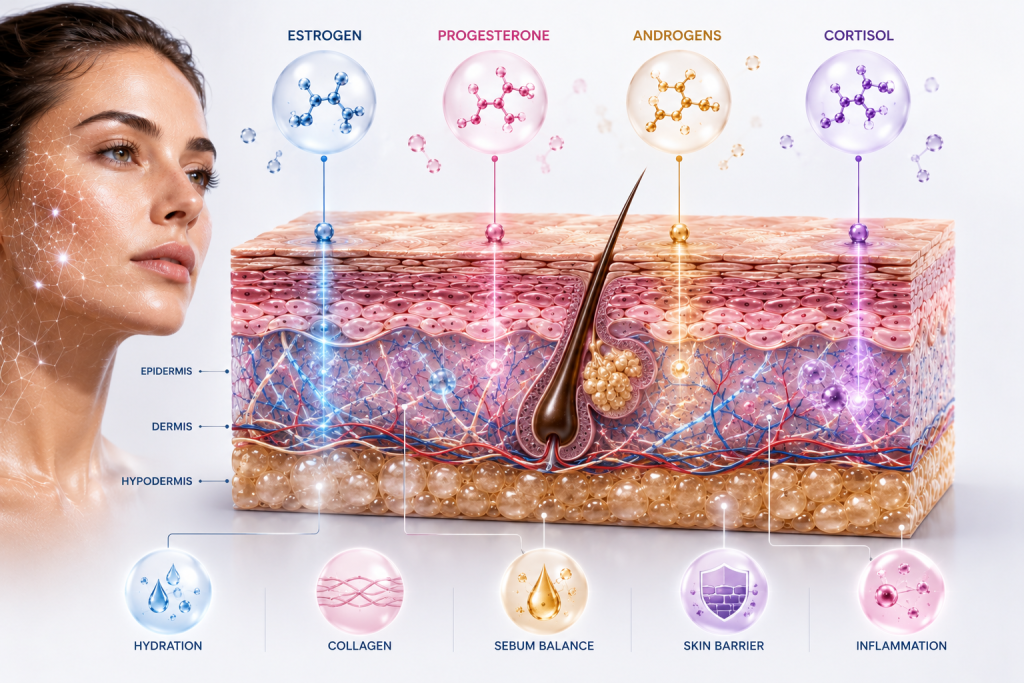
For example, estrogens help maintain hydration, collagen production, and skin thickness. Androgens can stimulate sebaceous gland activity and increase oil production. Cortisol, often referred to as the stress hormone, may affect barrier function and promote inflammatory processes when elevated for extended periods.
Because hormone levels naturally fluctuate throughout life, the skin is constantly adapting to these internal signals.
The Rise of Personalized Skincare
The popularity of hormonal skincare is part of a broader trend toward personalization within the beauty industry.
Today’s consumers are increasingly aware that skincare cannot be approached through one-size-fits-all solutions. Advances in dermatological research, digital technologies, and skin-monitoring tools have highlighted the importance of individual biological factors in determining the skin’s actual needs.
As a result, brands are exploring approaches capable of considering variables such as:
- Hormonal cycles.
- Lifestyle habits.
- Environmental exposure.
- Age-related changes.
- Skin microbiome composition.
Within this context, hormonal skincare represents a natural evolution toward more adaptive, personalized skincare solutions designed around the unique needs of each consumer.
How Hormones Affect Skin Physiology
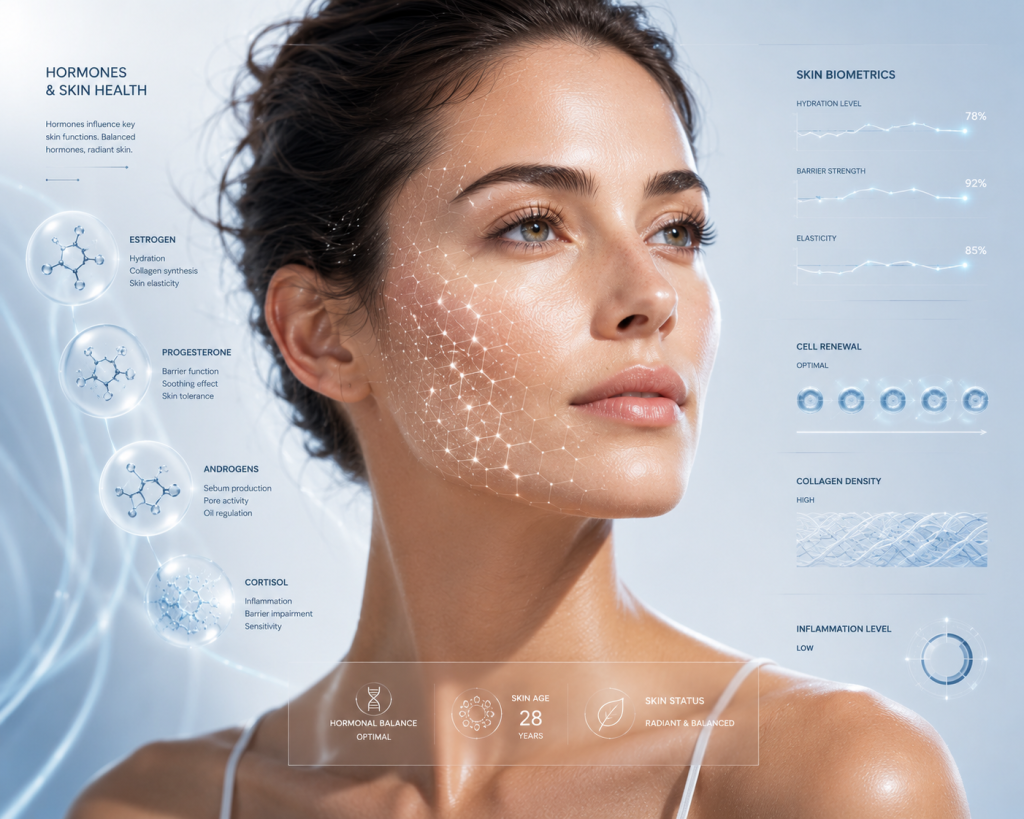
Hormones influence virtually every layer of the skin. Their effects can be observed through changes in texture, hydration, sensitivity, elasticity, and overall skin condition.
Understanding these mechanisms is essential for developing effective cosmetic solutions tailored to hormonally influenced skin.
Sebum Production
Sebum plays an essential role in protecting the skin and maintaining natural hydration. However, excessive sebum production can contribute to blemishes and skin imbalances.
Among the hormones involved in regulating sebum production, androgens play a particularly important role.
When androgen activity increases, sebaceous glands may become more active, leading to:
- Increased oiliness.
- More visible pores.
- Blemishes and breakouts.
- Excess shine.
These changes are commonly observed during certain phases of the menstrual cycle, adolescence, or periods of hormonal imbalance.
For cosmetic laboratories, this presents an opportunity to develop formulations that help regulate sebum production without compromising skin barrier function.
Skin Hydration
Hydration levels are also closely linked to hormonal activity.
Estrogens play an important role in the skin’s ability to retain moisture by supporting the production of molecules involved in hydration and helping maintain barrier integrity.
When estrogen levels are higher, the skin often appears:
- More hydrated.
- Smoother.
- More radiant.
- More resilient to environmental aggressors.
Conversely, periods associated with declining estrogen levels may result in increased dryness, roughness, and reduced skin comfort.
These changes become particularly relevant during perimenopause and menopause but may also occur during different phases of the menstrual cycle.
Barrier Function
The skin barrier serves as the body’s first line of defense against external aggressors.
Hormonal fluctuations can influence the effectiveness of this protective barrier, affecting the skin’s ability to retain moisture and resist environmental stressors.
When barrier function becomes compromised, symptoms may include:
- Increased sensitivity.
- Tightness.
- Dryness.
- Redness.
- Reduced tolerance to certain cosmetic actives.
This variability helps explain why some individuals notice that their skin reacts differently to the same products at different times of the month.
As a result, strengthening and supporting the skin barrier has become one of the primary goals in hormonal skincare product development.
Collagen Synthesis
Collagen is one of the most important structural proteins responsible for maintaining skin firmness and elasticity.
Estrogens actively participate in the mechanisms involved in collagen production and maintenance. When estrogen levels decline, collagen synthesis may decrease, contributing to gradual changes such as:
- Loss of firmness.
- Reduced elasticity.
- Appearance of fine lines.
- Skin thinning.
Although these processes are most commonly associated with aging and menopause, they clearly illustrate the influence hormones exert on skin structure throughout life.
Consequently, ingredients that support or protect collagen production are becoming increasingly important within hormonal skincare formulations.
Inflammation and Sensitivity
Hormones can also influence inflammatory processes within the skin.
Hormonal fluctuations may alter the skin’s response to external stimuli, contributing to periods of increased sensitivity and reactivity.
During these phases, some individuals experience:
- Redness.
- Irritation.
- Discomfort.
- Reduced tolerance to cosmetic products.
In addition, stress can amplify these effects through the action of cortisol.
When cortisol levels remain elevated for prolonged periods, they may negatively affect barrier function and promote inflammatory mechanisms that impact overall skin health.
For this reason, soothing and barrier-supporting ingredients are becoming increasingly important components of hormonal skincare routines.
The Menstrual Cycle and Skin Changes
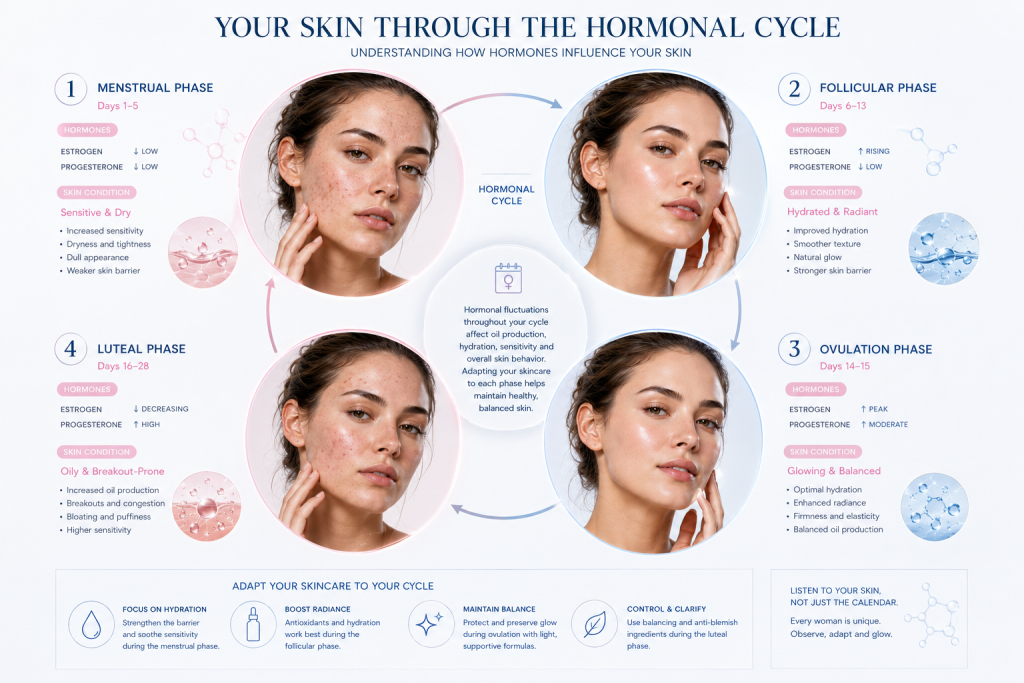
One of the clearest examples of the relationship between hormones and skin physiology can be observed throughout the menstrual cycle.
Although every individual experiences hormonal fluctuations differently, many women identify recurring patterns in skin behavior associated with specific phases of the cycle.
Understanding these variations can help consumers make more informed skincare decisions while providing valuable insights for the development of new formulations.
Menstrual Phase
The menstrual phase marks the beginning of the cycle and is characterized by relatively low levels of both estrogen and progesterone.
During this period, it is common to experience:
- Increased skin sensitivity.
- Reduced hydration.
- Dull-looking skin.
- Greater susceptibility to irritation.
Because the skin barrier may be more vulnerable, gentle, moisturizing products focused on restoring comfort are often recommended.
Follicular Phase
Following menstruation, estrogen levels begin to rise gradually.
This increase is often associated with visible improvements in skin appearance and quality.
Many people notice:
- Increased radiance.
- Better hydration.
- Smoother texture.
- Reduced sensitivity.
The follicular phase is often considered one of the most balanced and favorable periods for the skin throughout the cycle.
Ovulation
Ovulation generally coincides with peak estrogen levels.
During this stage, the skin often appears:
- More radiant.
- Better hydrated.
- More elastic.
- More resilient.
For many women, this is the point in the cycle when their skin looks and feels its healthiest.
However, hormonal activity continues to evolve, and skin physiology will once again change during the next phase of the cycle.
Luteal Phase
Following ovulation, the luteal phase begins, characterized by increased progesterone levels and hormonal shifts that can significantly influence skin behavior.
During this stage, it is common to experience:
- Increased sebum production.
- More frequent blemishes.
- Greater pore congestion.
- A noticeably oilier complexion.
- Increased skin sensitivity in some individuals.
Many women identify this phase as the period when so-called hormonal breakouts occur, particularly around the jawline, chin, and lower face.
These changes highlight the importance of adopting a more dynamic approach to skincare by adjusting certain products and active ingredients according to the skin’s physiological variations throughout the cycle.
| Cycle Phase | Hormonal Changes | Common Skin Characteristics |
| Menstrual | Low estrogen and progesterone | Increased sensitivity and dryness |
| Follicular | Rising estrogen levels | Improved radiance and hydration |
| Ovulation | Peak estrogen levels | Balanced, glowing skin |
| Luteal | Increased progesterone | More oiliness and blemishes |
Does Cosmetic Absorption Change Throughout the Hormonal Cycle?
One of the most interesting questions within hormonal skincare is whether hormonal fluctuations can influence the way the skin responds to cosmetic products.
Although skin absorption depends on multiple factors—including formulation characteristics, ingredient molecular size, and skin barrier condition—hormonal changes can alter physiological conditions that affect the perceived efficacy of cosmetic products.
Skin Barrier Permeability
The skin barrier does not always function with the same level of efficiency.
During certain stages of the hormonal cycle, particularly when estrogen levels are lower, the skin may exhibit a more vulnerable barrier function.
This can result in:
- Increased transepidermal water loss.
- Feelings of dryness.
- Greater sensitivity.
- Increased reactivity to specific ingredients.
Under these circumstances, certain active ingredients may feel stronger or less tolerable than they do during other phases of the cycle.
Hydration Levels and Active Ingredient Penetration
Skin hydration can also influence both product performance and user experience.
Well-hydrated skin generally presents a smoother surface and a more balanced barrier function, which can support the overall effectiveness of cosmetic formulations.
Conversely, when the skin becomes drier or more sensitive, consumers may perceive reduced efficacy or a different response to the same products.
Inflammation and Ingredient Tolerance
Hormonal fluctuations may also influence inflammatory responses within the skin.
As a result, ingredients that are normally well tolerated may trigger greater sensitivity during certain phases of the cycle.
This is particularly relevant for active ingredients such as:
- Retinoids.
- Chemical exfoliants.
- Alpha-hydroxy acids (AHAs).
- Beta-hydroxy acids (BHAs).
- High-concentration vitamin C.
For this reason, some hormonal skincare approaches recommend adjusting the intensity of specific treatments according to the skin’s hormonal state.
Why Results May Vary Throughout the Month
The combination of changes in hydration, sebum production, barrier function, and inflammation helps explain why many people notice fluctuations in the effectiveness of their skincare routines throughout the month.
Rather than viewing the skin as a static structure, hormonal skincare embraces a more dynamic perspective in which skin needs continuously evolve.
This approach creates new opportunities for the development of more adaptive and personalized cosmetic formulations.
Key Ingredients for Hormonal Skincare
As interest in the relationship between hormones and skin health continues to grow, certain ingredients have emerged as particularly valuable for addressing hormonally driven skin concerns.
Niacinamide
Niacinamide is one of the most versatile active ingredients in modern skincare.
Its benefits include:
- Regulation of sebum production.
- Strengthening of the skin barrier.
- Reduction of redness.
- Improvement of skin texture.
Thanks to its excellent tolerance profile, it is suitable for different phases of the hormonal cycle.
Hyaluronic Acid
Hyaluronic acid‘s ability to retain water makes it especially valuable during periods associated with reduced skin hydration.
Its key benefits include:
- Immediate hydration.
- Improved skin comfort.
- A plumper, healthier appearance.
- Reduced feelings of tightness.
Ceramides
Ceramides are essential components of the skin barrier.
Their incorporation into hormonal skincare formulations may help:
- Strengthen barrier function.
- Reduce moisture loss.
- Improve resistance to environmental aggressors.
- Enhance skin tolerance.
Peptides
Peptides have become highly valued ingredients due to their ability to support various processes associated with skin quality.
Their use is particularly relevant during stages linked to changes in skin firmness and elasticity.
Retinoids
Retinoids remain one of the most scientifically supported categories of cosmetic actives.
Depending on individual skin needs, they may help:
- Improve cellular renewal.
- Reduce blemishes.
- Promote a smoother skin texture.
- Improve the appearance of fine lines.
However, due to their potential for irritation, it is important to consider the skin’s sensitivity level at different stages of the hormonal cycle.
Azelaic Acid
Azelaic acid is gaining popularity within hormonal skincare thanks to its versatility.
It may be particularly beneficial for addressing:
- Hormonal breakouts.
- Redness.
- Uneven skin tone.
- Sensitive skin.
Hormonal Skincare During Perimenopause and Menopause
Although much of the conversation around hormonal skincare focuses on the menstrual cycle, the hormonal changes associated with perimenopause and menopause represent some of the most significant challenges for skin health.
Declining Estrogen Levels
During this stage, estrogen levels gradually decrease, affecting multiple skin functions.
As a result, women may experience:
- Reduced hydration.
- Loss of elasticity.
- Decreased skin density.
- More visible wrinkles.
Increased Dryness and Loss of Firmness
The decline in estrogen can affect both moisture retention and collagen production.
This often leads to skin that is:
- Thinner.
- Drier.
- Less firm.
- More prone to sensitivity.
Barrier Function Impairment
The skin barrier may also become compromised during this stage.
For this reason, formulations designed for perimenopausal and menopausal skin typically prioritize:
- Intensive hydration.
- Barrier repair.
- Soothing ingredients.
- Antioxidant protection.
Opportunities for Targeted Formulations
Hormonal aging represents one of the most promising areas for innovation within the cosmetics industry.
As a result, brands are increasingly developing products specifically designed to address the changing needs of skin during this stage of life.
The Role of Personalized Formulation in Hormonal Skincare
Growing understanding of the relationship between hormones and skin health is driving new approaches to cosmetic personalization.
Data-Driven Skincare
Emerging technologies make it possible to collect information about multiple factors affecting the skin, including:
- Age.
- Lifestyle.
- Environmental conditions.
- Skincare habits.
- Hormonal cycles.
This information can be used to develop more accurate and personalized skincare recommendations.
Artificial Intelligence and Skin Monitoring
Artificial intelligence-powered tools are beginning to play an important role in evaluating the skin’s changing needs.
In the future, these technologies may help consumers adopt skincare routines tailored to each phase of their hormonal cycle.
Adaptive Formulations
Another emerging trend involves the development of products capable of responding to different physiological states of the skin.
This approach represents an exciting opportunity for laboratories and manufacturers seeking to differentiate themselves through innovation.
New Opportunities for Cosmetic Brands
The convergence of personalization, technology, and biological understanding is transforming the skincare market.
Hormonal skincare is emerging as one of the categories with the greatest growth potential in the years ahead.
Emerging Trends in Hormonal Skincare
Skin Cycle Syncing
One of the most popular trends involves adapting skincare routines to the different phases of the menstrual cycle.
This approach seeks to align skincare needs with the hormonal changes that occur throughout the month.
Microbiome-Friendly Formulations
The skin microbiome is becoming an increasingly important area of interest within cosmetic research.
Future formulations may incorporate strategies designed to maintain microbial balance even during periods of hormonal fluctuation.
Neurocosmetics and Stress-Related Skincare
The connection between the skin, nervous system, and hormones is driving the development of innovative cosmetic solutions.
Neurocosmetics represents one of the most promising fields for addressing the effects of stress on skin health.
Women-Focused Innovation
Growing interest in women’s health is fueling significant advances in cosmetic research and development.
As a result, hormonal skincare is expected to continue evolving toward increasingly targeted, effective, and personalized solutions.
Conclusion
Hormones play a fundamental role in skin behavior. Their fluctuations influence diverse aspects of skin physiology, including hydration, sebum production, sensitivity, barrier function, and collagen synthesis.
These variations help explain why the skin may respond differently to the same products at different points in the hormonal cycle or during various stages of life.
As scientific understanding of the interaction between hormones and skin physiology continues to expand, hormonal skincare is emerging as one of the most promising areas of cosmetic innovation. For brands, laboratories, and manufacturers, this trend represents a strategic opportunity to develop more personalized solutions capable of addressing consumers’ evolving needs.
In an increasingly personalized beauty market, understanding the influence of hormonal cycles on the skin will be key to designing the next generation of cosmetic products.