

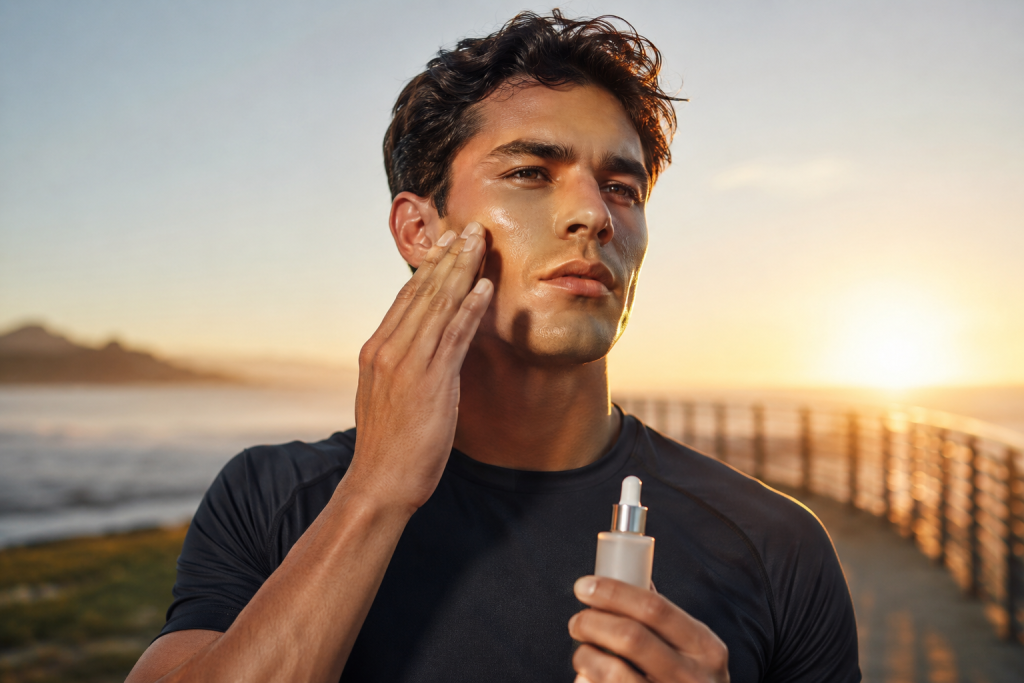
Skincare has evolved far beyond traditional beauty routines. In recent years, the convergence of trends such as the rise of fitness, growing concern for overall well-being, and the pursuit of active lifestyles has given rise to a new category within the cosmetics industry: sports skincare.
This concept encompasses products specifically formulated to address the skin’s needs before, during, and after physical activity. From sweat-resistant sunscreens to post-workout cleansers and restorative creams for skin exposed to demanding conditions, sports skincare is emerging as one of the most promising segments within the beauty and personal care market.
The opportunity is particularly significant given the growing number of people who engage in sports and exercise regularly around the world. Today’s consumers are not only focused on improving their physical performance but also on protecting their health and maintaining their appearance. As the body’s largest organ, the skin is constantly exposed to factors that can be intensified during physical activity, including solar radiation, perspiration, environmental pollution, temperature fluctuations, and mechanical friction.
In this context, sports skincare represents an attractive opportunity for cosmetic brands, manufacturers, and laboratories looking to develop innovative products that meet evolving market demands.
What Is Sports Skincare?
Defining Cosmetics for Athletes
The term sports skincare refers to cosmetic products specifically designed to meet the needs of individuals who engage in physical activity on a regular basis. Unlike conventional skincare products, these formulations take into account the unique conditions that the skin faces during exercise.
Although anyone can benefit from these products, they are primarily developed for athletes, fitness enthusiasts, runners, cyclists, outdoor sports participants, and consumers with active lifestyles.
The main goal of sports skincare is to help keep the skin protected, balanced, and healthy in the face of the physical and environmental stressors associated with exercise.
How It Differs from Conventional Skincare
The main distinction between sports skincare and traditional cosmetic products lies in the context in which they are used.
While many conventional formulations are intended for everyday skincare under normal conditions, products designed for athletes must deliver superior performance in more demanding environments.
For example, they must:
- Withstand intense perspiration.
- Provide long-lasting sun protection.
- Absorb quickly without leaving a greasy residue.
- Minimize the risk of friction-related irritation.
- Help restore the skin barrier after physical exertion.
This requires formulation laboratories to work with specific textures, adapted delivery systems, and active ingredients capable of maintaining efficacy during prolonged training sessions and challenging environmental conditions.
Why Athletes Have Specific Skincare Needs
When we engage in physical activity, the skin undergoes a series of physiological changes that temporarily alter its behavior.
Some of the most common processes include:
- Increased body temperature.
- Higher sweat production.
- Dilation of blood vessels.
- Greater exposure to UV radiation during outdoor activities.
- Increased friction from technical clothing and sports equipment.
Although these responses are completely normal, they can create imbalances if they are not accompanied by an appropriate skincare routine.
For example, sweat can mix with sebum, environmental residues, and microorganisms present on the skin’s surface, potentially contributing to the appearance of blemishes. Likewise, continuous sun exposure during outdoor training sessions can accelerate photoaging if adequate sun protection products are not used.
For these reasons, more consumers are seeking skincare solutions specifically designed to support their active lifestyles.
Why Is the Sports Skincare Market Growing So Rapidly?
The Global Fitness and Wellness Boom
Over the past decade, the fitness industry has experienced extraordinary growth. Gyms, training centers, sports applications, running events, and wellness-focused activities have helped make physical exercise a fundamental part of everyday life for millions of people.
The evolution of the wellness concept has also played a key role. Today, consumers view health through a holistic lens that integrates physical, emotional, and aesthetic well-being.
As a result, skincare is no longer perceived solely as a beauty concern but also as an important component of health and protection.
Consequently, demand for products tailored to active lifestyles continues to grow among both younger consumers and older demographics.
The Rise of Outdoor Sports
Another factor driving the growth of sports skincare is the increasing popularity of outdoor activities.
Running, cycling, hiking, padel, triathlon, surfing, and mountain sports are among the disciplines that have expanded significantly in recent years.
However, these activities expose the skin to particularly aggressive environmental factors, including:
- Ultraviolet radiation.
- Wind.
- Cold temperatures.
- Humidity.
- Pollution.
- Sudden temperature changes.
As a result, consumers are seeking products capable of providing enhanced protection against these external aggressors.
Sweat-resistant sunscreens, barrier creams, and restorative skincare products have become particularly attractive categories within the sports skincare segment.
More Informed Consumers
Digitalization has also played a major role in the expansion of this category.
Social media platforms, healthcare professionals, dermatologists, and specialized content creators have helped increase public awareness of how the skin functions and how physical exercise affects it.
Today, many consumers understand that exercising regularly does not eliminate the need for proper skincare. On the contrary, they recognize that certain factors associated with sports participation may increase skin-related risks if preventive measures are not taken.
This growing awareness is fostering the development of specialized niches and accelerating the adoption of new cosmetic products.
The Influence of Athletes and Fitness Influencers
Public figures connected to sports have also contributed to the visibility of sports skincare.
It has become increasingly common to see professional athletes sharing their facial care routines, sun protection habits, and post-workout skin recovery practices.
At the same time, many fitness influencers have helped normalize the inclusion of skincare products within sports and wellness routines.
This trend is helping to eliminate outdated perceptions surrounding skincare while expanding the category’s target audience.
As a result, sports skincare is no longer viewed exclusively as a niche for professional athletes but rather as a relevant solution for anyone pursuing an active lifestyle.
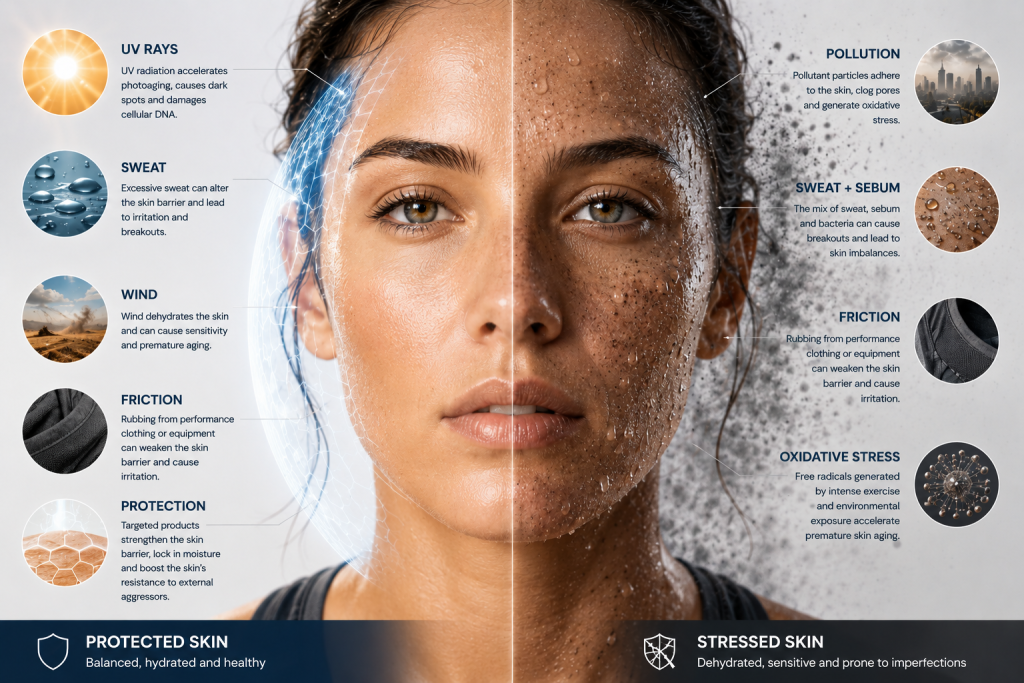
The Main Challenges Athletes’ Skin Faces
Physical activity offers numerous health benefits, but it also presents a variety of unique challenges for the skin. Understanding these challenges is essential for developing effective cosmetic products that address real consumer needs.
Sweat and Pore Congestion
Sweating is a fundamental physiological mechanism that helps regulate body temperature during exercise.
However, when sweat remains on the skin’s surface for extended periods, it can encourage the accumulation of impurities, sebum, and microorganisms.
This may increase the likelihood of:
- Acne flare-ups.
- Blackheads.
- Localized irritation.
- Skin sensitivity.
The most affected areas are typically the forehead, back, chest, and regions covered by tight sportswear.
For this reason, gentle post-workout cleansers represent one of the most promising product categories within the sports skincare market.
Prolonged Sun Exposure
Ultraviolet radiation remains one of the primary contributors to premature skin aging.
Athletes who train outdoors can accumulate substantial sun exposure throughout the year, particularly in disciplines such as running, cycling, tennis, golf, and water sports.
Without adequate protection, this exposure can contribute to:
- Hyperpigmentation.
- Loss of skin elasticity.
- Premature wrinkles.
- Oxidative stress.
- Increased cumulative skin damage.
The need for comfortable, sweat-resistant sunscreens compatible with physical activity will continue to drive innovation within this category.
Friction and Irritation
Constant contact with technical garments, backpacks, sports equipment, and training surfaces can generate friction-related skin issues.
These irritations are particularly common among runners, cyclists, and endurance athletes.
Typical consequences include:
- Redness.
- Burning sensations.
- Chafing.
- Skin barrier disruption.
- Localized inflammation.
Demand for protective and soothing products capable of minimizing these effects continues to grow among increasingly demanding consumers.
Skin Dehydration
Although many people associate exercise with healthier skin, the reality is that continuous water loss through perspiration can contribute to skin dehydration if not properly compensated.
Dehydrated skin often exhibits:
- Reduced elasticity.
- A dull appearance.
- Feelings of tightness.
- Increased sensitivity to environmental stressors.
For this reason, lightweight moisturizing formulations with rapid absorption and compatibility with active lifestyles are becoming one of the most attractive areas for new product development.
The Most In-Demand Sports Skincare Products
As the category continues to grow, certain product types have emerged as key market drivers. These solutions directly address the most common skin concerns faced by athletes and represent some of the most promising areas for new brand development.
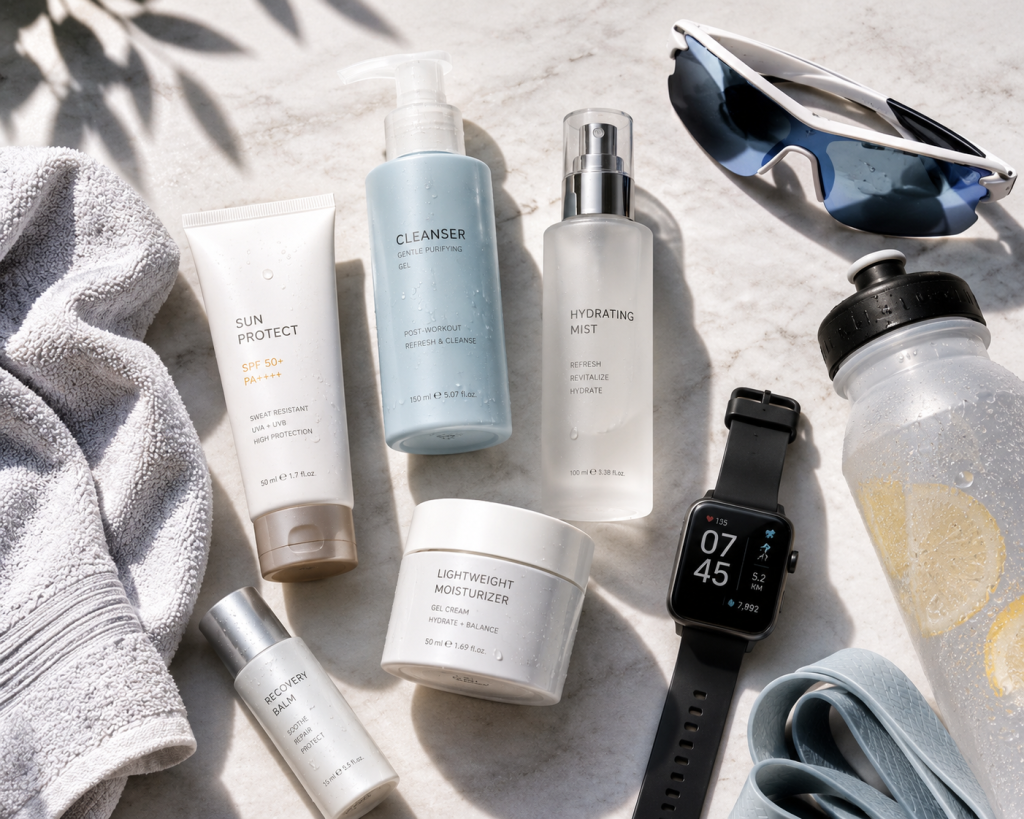
Sweat-Resistant Sunscreens
Sun protection is arguably one of the most important segments within sports skincare.
Consumers who participate in outdoor activities require products capable of maintaining effective protection even during prolonged periods of exercise. To achieve this, sports sunscreens often incorporate specific characteristics such as:
- Water and sweat resistance.
- Lightweight, non-greasy textures.
- Fast absorption.
- Invisible finishes.
- High skin tolerance.
In addition, ease of use has become a decisive factor. Today’s consumers seek formulations that do not feel sticky or interfere with athletic performance.
Post-Workout Cleansers
After exercise, proper cleansing becomes essential.
During physical activity, sweat, sebum, environmental pollutants, sunscreen residues, and makeup can accumulate on the skin. If these substances remain on the skin for extended periods, they may contribute to irritation and blemishes.
For this reason, cleansers designed specifically for active consumers are often formulated to:
- Effectively remove impurities.
- Preserve the skin barrier.
- Prevent excessive dryness.
- Reduce the risk of acne breakouts.
Gentle formulations that respect the skin microbiome are gaining increasing relevance within this category.
Lightweight Moisturizers for Active Lifestyles
One of the biggest challenges in sports skincare is delivering effective hydration without compromising comfort.
Physically active consumers often reject heavy or greasy textures, especially when products are applied before exercise.
As a result, the most sought-after formulations typically combine:
- Deep hydration.
- Fast absorption.
- Lightweight finishes.
- Refreshing sensory profiles.
These products help maintain skin balance without creating discomfort during physical activity.
Anti-Chafing Products
Chafing is one of the most common issues experienced by runners, cyclists, and endurance athletes.
The combination of repetitive movement, moisture, and contact with technical fabrics can lead to irritation that negatively affects athletic performance and overall comfort.
To address this need, more brands are developing specialized products that help:
- Reduce friction.
- Protect sensitive areas.
- Preserve skin barrier integrity.
- Improve comfort during prolonged training sessions.
This category is particularly attractive due to its strong functional benefits and high level of specialization.
Multifunctional Skincare for Active Consumers
Another major trend is the growing demand for multifunctional products.
Modern consumers increasingly value practical solutions that simplify their daily routines.
As a result, products combining several benefits within a single formulation are gaining popularity, including:
- Hydration and sun protection.
- Antioxidant and soothing action.
- Protection against pollution and UV exposure.
- Simultaneous repair and moisturization.
This trend aligns perfectly with consumers’ desire for efficiency and convenience.
Key Ingredients in Modern Sports Skincare
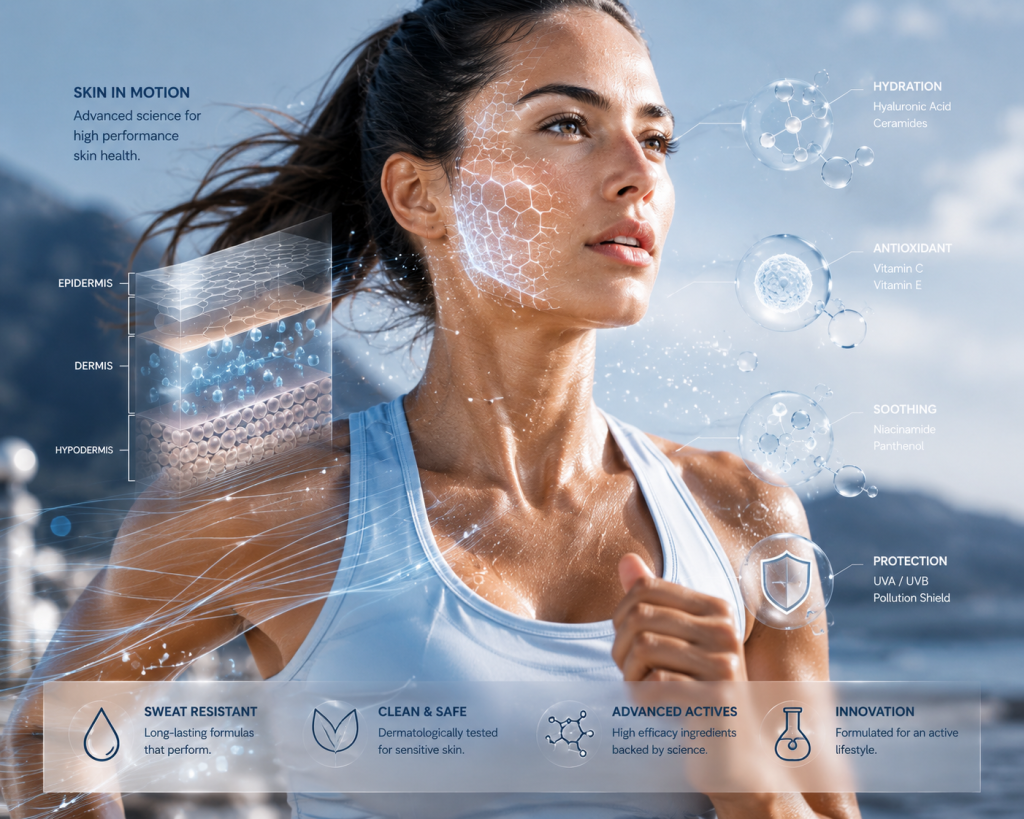
The success of a sports skincare line largely depends on the selection of effective active ingredients. Formulations must address both protection and recovery needs.
Hyaluronic Acid
Hyaluronic acid has become one of the most widely used ingredients in sports skincare due to its exceptional water-retention capacity.
Its primary benefits include:
- Improved skin hydration.
- Enhanced elasticity.
- Reduced feelings of tightness.
- Greater comfort after exercise.
Its versatility allows it to be incorporated into serums, gels, lightweight creams, and post-workout recovery products.
Niacinamide
Niacinamide is particularly valuable for active consumers thanks to its multiple skin benefits.
These include:
- Regulation of sebum production.
- Strengthening of the skin barrier.
- Reduction of redness.
- Improvement of skin texture.
Its excellent tolerance profile also makes it suitable for a wide range of skin types.
Panthenol
Also known as provitamin B5, panthenol is widely recognized for its soothing and repairing properties.
It is especially useful for:
- Reducing irritation.
- Supporting skin recovery.
- Maintaining hydration.
- Improving comfort after environmental exposure.
As a result, it is frequently incorporated into products designed for post-workout use or outdoor sports recovery.
Electrolytes and Minerals
Water loss through perspiration is often accompanied by the loss of essential minerals.
For this reason, some formulations incorporate ingredients inspired by sports hydration concepts to help support skin moisture balance.
These ingredients may contribute to:
- Improved hydration.
- Enhanced barrier function.
- A healthier-looking complexion.
Antioxidants
Intense physical activity can increase the production of reactive oxygen species, particularly when combined with sun exposure and environmental pollution.
Antioxidants help combat oxidative stress and represent one of the most innovative areas within sports skincare.
Commonly used ingredients include:
- Vitamin C.
- Vitamin E.
- Resveratrol.
- Coenzyme Q10.
- Polyphenol-rich botanical extracts.
These ingredients help reinforce the skin’s natural defense mechanisms.
Centella Asiatica
Centella asiatica has gained significant popularity due to its soothing and restorative properties.
It is particularly beneficial for athletes experiencing:
- Irritation.
- Redness.
- Sensitivity.
- Skin barrier disruption.
Its inclusion in formulations supports skin recovery and overall comfort after physical exertion.
How to Build an Effective Sports Skincare Routine
A skincare routine tailored to physical activity can significantly improve both skin health and appearance.
Before Exercise
Preparation begins before training starts.
The primary objectives during this stage are:
- Protecting the skin.
- Maintaining hydration.
- Minimizing the accumulation of impurities.
A basic routine may include:
- Gentle cleansing.
- Lightweight moisturizer.
- Broad-spectrum sunscreen for outdoor activities.
Choosing lightweight textures is essential to avoid discomfort during exercise.
During Physical Activity
Although most products are applied before or after training, several measures can help protect the skin during exercise.
These include:
- Reapplying sunscreen during prolonged outdoor activities.
- Wearing appropriate technical clothing.
- Using physical sun protection such as caps or visors.
- Maintaining proper hydration.
Prevention remains the most effective strategy for minimizing cumulative skin damage.
After Exercise
The post-workout phase is crucial for skin recovery.
Recommended steps typically include:
- Cleansing to remove sweat and impurities.
- Applying soothing ingredients.
- Restoring hydration.
- Using antioxidant protection when appropriate.
This stage presents significant opportunities for the development of specialized sports skincare products.
The Business Opportunity Behind Sports Skincare
Beyond its benefits for consumers, sports skincare represents a significant opportunity for manufacturers, laboratories, and brands.
A Market with Untapped Potential
Despite its growth, sports skincare remains a relatively young category compared to other cosmetic segments.
This means there are still numerous opportunities to:
- Develop new value propositions.
- Create highly specialized products.
- Address the needs of specific sports disciplines.
- Differentiate through formulation innovation.
Brands entering this category today may benefit from substantial long-term growth potential.
The Rise of Specialized Brands
Today’s consumers increasingly value brands that solve specific problems.
This trend favors companies that build their identity around a clearly defined niche.
Sports skincare fits perfectly within this model, allowing brands to create highly differentiated offerings compared to traditional skincare products.
Opportunities for Manufacturers and Private Label Companies
Cosmetic manufacturers are also finding attractive growth opportunities within this category.
Emerging brands are actively seeking partners capable of developing formulations tailored to active consumers.
Key opportunities include:
- Full sports skincare product lines.
- Specialized sunscreen formulations.
- Post-workout skincare solutions.
- Outdoor sports protection products.
- Performance-oriented multifunctional cosmetics.
The combination of innovation, efficacy, and user experience will be critical for success in this increasingly competitive market.
How to Develop a Sports Skincare Line
Building a strong sports skincare proposition requires several key considerations:
- Clearly defining the target audience.
- Understanding the challenges associated with specific sports.
- Prioritizing functional formulations.
- Maximizing user comfort.
- Validating product performance under real-life conditions.
Scientific credibility and sensory experience must work together to create compelling products.
Trends Shaping the Future of Sports Skincare
Sport-Specific Skincare Solutions
One of the most promising trends is increasing specialization.
Rather than developing products for all athletes, some brands are creating solutions tailored to specific sports such as:
- Running.
- Cycling.
- Swimming.
- Mountain sports.
- Water sports.
This approach allows brands to address highly specific needs more effectively.
Protection Against Urban Pollution
Athletes who train in urban environments face a dual challenge: sun exposure and pollution.
As a result, products combining photoprotection with environmental defense are expected to become increasingly important in the coming years.
Multifunctional Products
Simplicity will continue to influence purchasing decisions.
Consumers will increasingly favor formulations capable of delivering multiple benefits within a single product, reducing the number of steps required in their daily routines.
Beauty and Performance
One of the most significant evolutions in the category will be the convergence of beauty and performance.
Consumers are no longer focused solely on appearance; they also want products that help them feel comfortable and protected while exercising.
This combination of functionality, protection, and well-being will shape much of the future innovation within the sports skincare industry.
Conclusion
Sports skincare is rapidly establishing itself as one of the most promising categories within the cosmetics industry. Driven by the growth of fitness culture, the expansion of active lifestyles, and increased awareness of skin health, this segment offers significant opportunities for both consumers and brands.
The unique demands associated with physical activity are fueling the development of innovative formulations, advanced ingredients, and highly specialized products. At the same time, the category continues to demonstrate substantial growth potential, particularly in areas such as advanced sun protection, post-workout skin recovery, and multifunctional skincare solutions.
For manufacturers, laboratories, and brands seeking differentiation in an increasingly competitive market, sports skincare represents a strategic opportunity to connect with a new generation of consumers who view well-being as the seamless integration of health, performance, and personal care.