

Over the past decade, the cosmetics industry has undergone a radical transformation driven by social media. What began as simple product recommendations from content creators has evolved into a global business phenomenon: influencer beauty brands.
Today, influencers, celebrities, and digital creators are no longer limited to promoting third-party brands. Many have taken the next step and launched their own cosmetic products, leveraging the trust they have built with their communities to create businesses capable of competing with some of the industry’s most established companies.
Examples such as Rhode, founded by Hailey Bieber, Rare Beauty, created by Selena Gomez, Huda Beauty, launched by Huda Kattan, and Kylie Cosmetics, developed by Kylie Jenner, have demonstrated that a brand born on social media can become a multimillion-dollar company with international reach.
However, there is a widespread misconception: the belief that the success of these brands depends solely on the size of their founders’ audiences.
The reality is quite different.
Behind every successful launch lies a complex process that combines brand strategy, product development, market research, cosmetic formulation, community building, and commercial execution. In fact, many brands created by influencers with millions of followers have failed precisely because they underestimated one or more of these factors.
The real question is not how many followers a creator has.
The question is: what transforms an audience into a profitable and sustainable beauty brand?
What Is an Influencer Beauty Brand?
From Content Creation to Product Creation
An influencer beauty brand is a cosmetic company created or promoted by a personality with an established audience across social media or digital platforms.
Unlike traditional brands, which must build awareness from scratch, influencers start with a significant advantage: they already have a community that knows their style, values, and recommendations.
This proximity allows them to accelerate processes that would normally require years of marketing investment.
However, having an audience does not automatically mean having a brand.
Building a cosmetics company involves far more than designing a logo and launching a few products. It requires developing a strong value proposition, identifying real business opportunities, and creating products capable of addressing specific consumer needs.
The brands that achieve long-term success are those that manage to transform a digital relationship into a sustainable commercial relationship.
Why Influencers Have a Competitive Advantage
The attention economy has changed the rules of the market.
While many brands invest heavily in capturing consumer attention, influencers already possess one of the most valuable assets in today’s business environment: direct access to an engaged audience.
This advantage can translate into several benefits:
- Greater visibility during launch.
- Lower initial customer acquisition costs.
- More direct and authentic communication.
- The ability to gather real-time feedback.
- Faster product validation.
For example, when Hailey Bieber launched Rhode, she did not need to introduce herself or spend years building brand awareness. Her community was already interested in her skincare routines and the products she used.
The same was true for Huda Kattan, who transformed an audience built through beauty tutorials into one of the most influential beauty companies in the world.
However, this initial advantage has a limited lifespan.
Attention can generate sales, but it does not guarantee long-term business success.
The Difference Between an Audience and a Community
One of the most important concepts for understanding the success of an influencer beauty brand is the distinction between an audience and a community.
An audience represents the number of people who consume content.
A community represents the number of people who trust the person creating it.
This distinction is crucial.
Two influencers with the same number of followers can achieve completely different results when launching a beauty brand.
The difference often comes down to factors such as:
- Credibility.
- Frequency of interaction.
- Niche relevance.
- Content quality.
- Emotional connection with the audience.
In many cases, a creator with a smaller but highly engaged community can achieve stronger commercial results than another creator with millions of followers but low levels of trust.
For this reason, the most successful brands do not simply build visibility.
They build connection.
The Myth of Millions of Followers
Having an Audience Does Not Guarantee Sales
One of the most common mistakes among content creators looking to launch a beauty brand is assuming that audience size guarantees commercial success.
Recent industry history shows that this is not always the case.
There are numerous examples of influencers with massive digital communities who have failed to transform that visibility into sustainable sales.
The reason is simple: following someone on social media requires very little effort. Purchasing a product requires trust, interest, and a clear perception of value.
The gap between those two actions is much larger than many people imagine.
For this reason, the most important metrics are not limited to follower count.
Other factors matter just as much:
- Engagement rate.
- Recommendation potential.
- Perceived authority.
- Relevance to the beauty category.
- Ability to generate trust.
The Importance of Credibility
Trust has become one of the most valuable assets in the digital economy.
Modern consumers are exposed to thousands of advertisements, paid collaborations, and sponsored recommendations every day.
As a result, they are becoming increasingly selective about which products they choose to purchase.
The influencer beauty brands that achieve the strongest results typically share one common characteristic: a clear alignment between the founder’s public image and the brand’s value proposition.
Rare Beauty provides an excellent example.
Since its launch, the brand has built much of its identity around concepts such as authenticity, emotional well-being, and inclusivity—values that are also central to Selena Gomez’s public image.
This alignment strengthens the brand’s credibility and helps consumers perceive the project as genuine.
When Product Quality Matters More Than Popularity
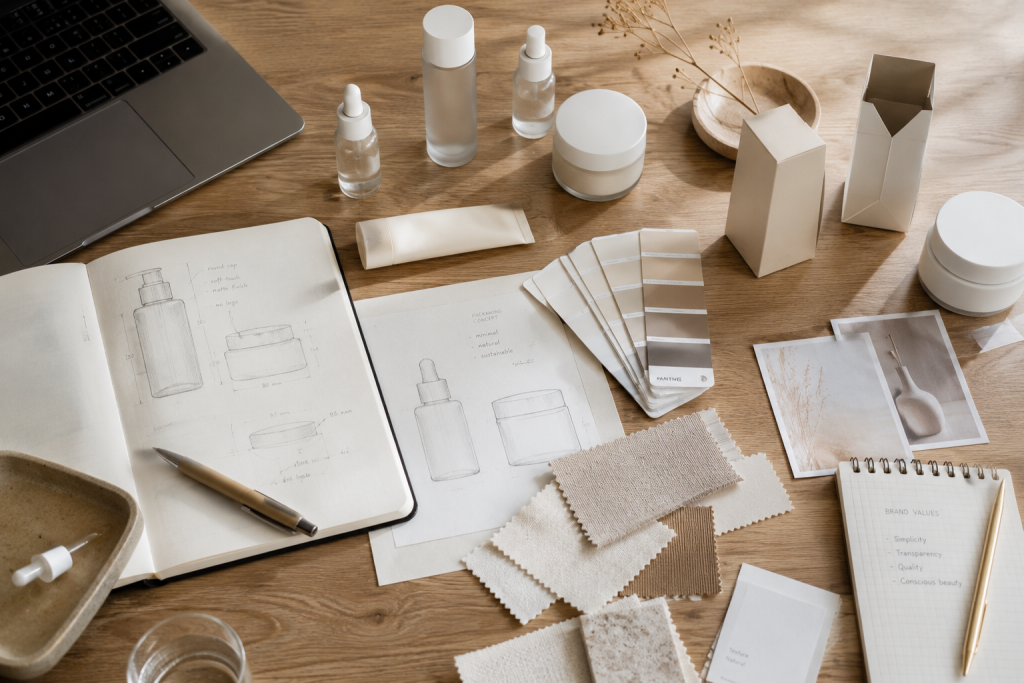
During the first days of a launch, popularity can drive sales.
However, in the medium and long term, product quality becomes the decisive factor.
Consumers may purchase once out of curiosity or admiration for a celebrity.
Repeat purchases, however, depend on very different factors:
- Perceived efficacy.
- User experience.
- Formulation quality.
- Value for money.
- Differentiation from competitors.
This is one of the main reasons why some brands survive for years while others disappear shortly after launch.
Social media may attract consumers.
The product is what brings them back.
What Really Happens Behind a Successful Influencer Beauty Brand?
From the outside, many brands appear to emerge overnight.
One day, a creator posts a launch video on Instagram or TikTok. A few weeks later, the media is reporting waiting lists, sold-out products, and multimillion-dollar revenues.
The reality is usually very different.
Most successful launches are the result of months—or even years—of preparation.
Market Research
Before formulating a product, the strongest brands dedicate significant resources to understanding the market.
This includes analyzing factors such as:
- Consumer trends.
- Unmet needs.
- High-growth categories.
- Competitive activity.
- Audience expectations.
Rhode, for example, did not launch by trying to compete across every beauty category simultaneously.
Its initial strategy focused on a specific proposition: skincare products featuring simple formulations, minimalist aesthetics, and a highly defined positioning.
This specialization helped consumers quickly understand what the brand offered and why it was different.
Brand Positioning
One of the biggest mistakes an influencer beauty brand can make is trying to appeal to everyone.
The most successful brands typically have extremely clear positioning.
When consumers hear names such as Rhode, Rare Beauty, or Huda Beauty, they immediately associate them with a specific set of values and attributes.
That level of clarity does not happen by accident.
It is the result of a carefully designed strategy that defines:
- Target audience.
- Brand personality.
- Value proposition.
- Competitive differentiation.
- Core messaging.
Before developing any product, the most successful brands answer one essential question:
Why should this brand exist if the market is already full of alternatives?
Product Development: Where the Real Brand Begins
One of the biggest misconceptions about influencer beauty brands is the assumption that success depends solely on marketing.
The reality is that behind every brand capable of achieving long-term success lies a product development process that is far more complex than it appears from the outside.
Once positioning has been defined, a critical stage begins: transforming an idea into a product capable of meeting consumer expectations.
This phase involves multiple processes, including:
- Ingredient research and selection.
- Formula development.
- Stability testing.
- Compatibility testing.
- Claims validation.
- Consumer experience studies.
- Regulatory compliance.
Brands that build strong market positions typically become actively involved in this process rather than simply selecting generic products that already exist.
One of the factors that contributed significantly to Rhode‘s early success was the perception that the brand offered a clear and coherent product proposition rather than simply leveraging celebrity influence.
Packaging and Brand Experience
In the beauty industry, the product experience does not begin when the consumer applies the formula.
It begins when they see the packaging.
For this reason, packaging plays a strategic role in any influencer beauty brand.
An effective design must fulfill several objectives:
- Stand out visually.
- Reinforce brand positioning.
- Communicate quality.
- Enhance the user experience.
- Encourage social media sharing.
Rhode‘s minimalist aesthetic, Rare Beauty‘s emotionally driven design language, and Huda Beauty‘s strong visual identity all demonstrate how packaging can become an extension of the brand’s personality.
In many cases, packaging becomes one of the product’s most powerful marketing assets.
The Ingredients That Make a Brand Go Viral… and the Ones That Make It Profitable
The Power of Storytelling
Virality rarely comes from the formulation alone.
Most products that succeed on social media are supported by a story capable of creating an emotional connection with consumers.
People do not simply buy ingredients.
They buy meaning.
They buy aspirations.
They buy identity.
For this reason, the most successful brands build narratives that answer questions such as:
- What does this brand stand for?
- What problem does it solve?
- Why is it different?
- Why should consumers care?
Rare Beauty is an excellent example of effective storytelling.
From the beginning, the brand avoided positioning itself solely as a makeup company. Instead, it built a narrative centered around self-acceptance, diversity, and mental health.
This story enabled the brand to connect with consumers on a much deeper level than the products themselves.
Differentiation as a Competitive Advantage
One of the biggest challenges facing any influencer beauty brand is avoiding becoming “just another beauty brand.”
The cosmetics industry is one of the most saturated markets in the world.
Thousands of new products are launched every year.
In this environment, differentiation is no longer a competitive advantage—it is a necessity.
The most successful brands typically differentiate themselves through:
- Formulation innovation.
- Specific niche focus.
- Clear positioning.
- Highly engaged communities.
- Memorable brand experiences.
Repeat Purchases Are the True Measure of Success
Many launches generate headlines because of impressive initial sales figures.
However, the metric that truly determines a brand’s future is repeat purchasing.
A successful launch can generate significant revenue for weeks or months.
Repeat purchases are what transform a launch into a sustainable business.
For this reason, the strongest brands prioritize factors such as:
- Product quality.
- Perceived results.
- Customer experience.
- Post-purchase support.
- Trust building.
The real challenge begins after launch day.
What We Can Learn from the Most Successful Influencer Beauty Brands
Rhode: Simplicity, Focus, and Aspirational Desire
When Hailey Bieber launched Rhode, many industry observers assumed its success would be driven primarily by her popularity.
However, the brand’s growth can be attributed to much more than celebrity influence.
Rhode focused on:
- A limited product range.
- Extremely clear positioning.
- Consistent visual identity.
- Formulations aligned with current skincare trends.
The brand quickly became associated with the “glazed skin” phenomenon, creating a strong connection between product performance and visual storytelling.
The key lesson is simple:
You do not need dozens of product launches to build a relevant beauty brand.
Rare Beauty: Building a Mission Beyond the Product
Rare Beauty represents one of the most compelling examples of emotionally driven brand building.
The company did not simply sell makeup.
It built an identity around values.
Its communication revolves around concepts such as:
- Inclusion.
- Diversity.
- Self-acceptance.
- Emotional well-being.
This approach allowed the brand to stand out in an extremely competitive market while fostering a highly engaged community.
The lesson is clear:
The strongest brands often represent something larger than the products they sell.
Huda Beauty: Authority and Consumer Understanding
Before launching Huda Beauty, Huda Kattan had already established herself as one of the most influential voices in the beauty industry.
For years, she had built an audience through educational beauty and makeup content.
This allowed her to develop products closely aligned with the needs and preferences of her community.
The brand stands out for:
- Deep consumer understanding.
- Continuous innovation.
- Broad product assortment.
- Strong trend-spotting capabilities.
The key takeaway is that authority creates trust—and trust drives conversion.
Kylie Cosmetics: The Power of Scarcity and Exclusivity
The launch of Kylie Cosmetics changed the way many brands approached e-commerce.
Its strategy relied heavily on:
- Limited-edition launches.
- A sense of exclusivity.
- A highly mobilized community.
- Constant social media communication.
The brand’s famous “sold out” moments became part of its marketing strategy.
Although this model is not always replicable, it demonstrated the power of anticipation and urgency during a product launch.
The Most Common Mistakes When Launching a Beauty Brand as an Influencer
Choosing Generic Products
One of the most common mistakes is launching products that are virtually identical to those already available on the market.
When consumers cannot identify a meaningful difference, brand relevance quickly fades.
Relying Solely on Audience Size
An audience may generate initial sales.
It cannot guarantee long-term growth.
Brands that depend exclusively on visibility often struggle once the novelty factor disappears.
Failing to Define a Clear Value Proposition
Many projects fail because they never answer a fundamental question:
Why does this brand exist?
If consumers cannot clearly identify the answer, building loyalty becomes extremely difficult.
Neglecting Product Formulation
Today’s consumers are increasingly attentive to:
- Ingredients.
- Efficacy.
- Scientific credibility.
- Perceived quality.
As a result, formulation has become a strategic differentiator within the beauty industry.
Overestimating Initial Sales
The excitement generated by social media can lead to unrealistic forecasts.
The strongest brands typically adopt conservative growth scenarios and prioritize long-term sustainability over rapid expansion.
How to Build an Influencer Beauty Brand from Scratch
Define a Specific Niche
Generalist brands are finding it increasingly difficult to stand out.
Identifying a specific consumer need often creates stronger growth opportunities.
Choose the Right Category
Skincare, makeup, haircare, body care, and wellness each operate under different market dynamics.
The category should align with both the founder’s audience and their perceived credibility.
Work with a Specialized Laboratory
One of the most important factors behind the success of an influencer beauty brand is partnering with experts capable of transforming an idea into a competitive product.
A specialized laboratory can provide:
- Formula development.
- Technical innovation.
- Regulatory compliance.
- Scalable manufacturing.
- Strategic support.
Validate Before Launching
The smartest brands use pilot programs, product samples, and consumer testing groups before making significant investments.
This stage helps reduce risk and optimize the final product.
Build a Strategic Launch Plan
Successful launches are rarely spontaneous.
They are often planned months in advance and include elements such as:
- Anticipation-building campaigns.
- Waiting lists.
- Content strategies.
- Public relations.
- Community-driven marketing.
The Future of Influencer Beauty Brands
The next generation of beauty brands will likely look very different from today’s market leaders.
Smaller but More Engaged Communities
Micro-influencers are proving that millions of followers are not always necessary to build meaningful businesses.
Greater Specialization
Specialization will continue to increase.
Future brands will be designed to solve increasingly specific consumer needs.
More Personalization
The combination of technology, consumer data, and advanced formulation will enable highly personalized beauty experiences.
Influencers as True Founders
Audiences are becoming more demanding.
As a result, consumers increasingly value founders who actively participate in building their brands rather than serving solely as promotional faces.
Conclusion
Influencer beauty brands have transformed the cosmetics industry and will continue to play a major role in its future. However, the most successful examples demonstrate that follower count is only a small part of the equation.
Behind brands such as Rhode, Rare Beauty, Huda Beauty, and Kylie Cosmetics, we find common elements: a clear vision, an engaged community, a differentiated value proposition, and products capable of meeting consumer expectations.
Social media can accelerate growth, but it cannot replace fundamental factors such as formulation quality, brand experience, and business strategy.
For any influencer or content creator looking to launch a beauty brand, the real opportunity is not simply to leverage an existing audience. It is to build a brand capable of generating trust, delivering value, and remaining relevant long after the initial excitement of the launch has faded.